

Choosing the right Office Visitor Chair is more than matching a reception desk or selecting the lowest price. It shapes a guest’s first physical impression of your workplace. A chair that rocks, traps heat, or forces knees too high can make a ten-minute meeting feel surprisingly long.
Recent workplace research supports this practical concern. Gensler’s 2024 Global Workplace Survey shows that employees still value offices for collaboration, learning, and connection. These activities often include clients, applicants, suppliers, and visiting partners. Steelcase’s Global Report also highlights changing workplace expectations, including greater demand for comfort, flexibility, and settings that support different types of interaction. Visitor seating must respond to those realities, not yesterday’s furniture habits.
The details matter.
Ergonomics researcher Alan Hedge is widely associated with a useful principle: “The best posture is the next posture.” This idea applies to visitors, even during brief appointments. Look for a supportive backrest, a seat that allows natural leg movement, and a stable frame that does not scrape across the floor. Upholstery should withstand repeated cleaning, especially near reception areas. Dimensions deserve equal attention; an attractive chair can still block circulation or crowd a small waiting zone.
This guide examines comfort, material performance, accessibility, maintenance, style, and total cost. It also questions a common assumption: a visitor chair does not need to be highly adjustable. Perhaps not for every guest. Yet fixed furniture still needs thoughtful proportions, reliable support, and enough space for different body types. The best choice feels ordinary in use, but carefully considered.
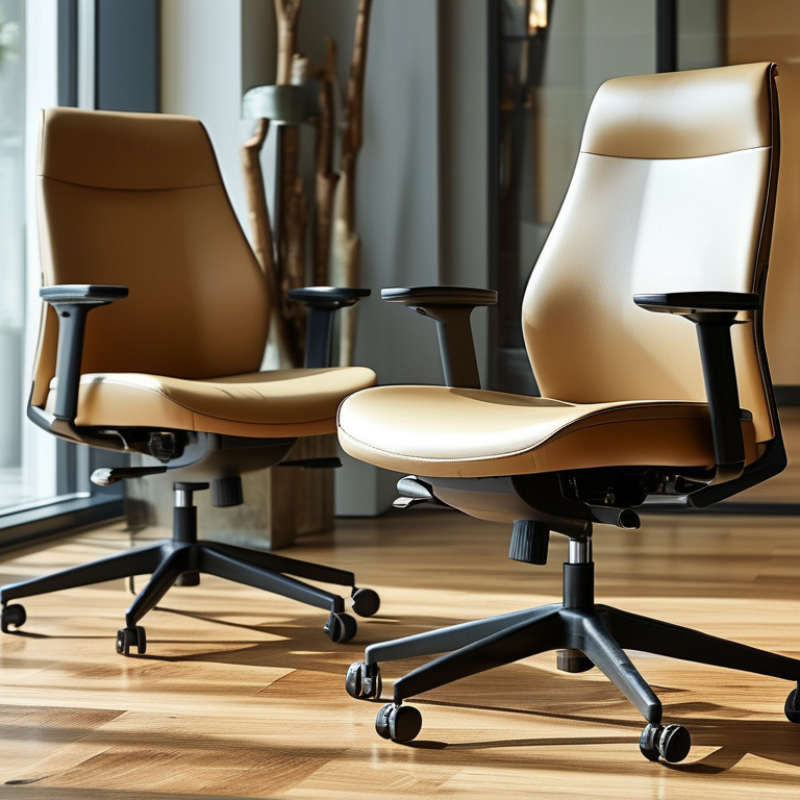
How to Choose the Best Office Visitor Chair?
Identify Visitor Profiles Using 5th–95th Percentile Anthropometric Data
A visitor chair should fit more than the average adult. The CDC’s Anthropometric Reference Data for U.S. Adults, 2015–2018, reports average standing heights of 175.4 cm for men and 161.7 cm for women. These averages can hide meaningful differences. Chair designers should examine the 5th–95th percentile range for stature, hip breadth, buttock-popliteal length, and popliteal height. That range covers most users, but not everyone. Some visitors will still need alternatives.
Start with the smallest expected user. A seat height that feels acceptable to a tall visitor may leave a shorter visitor’s feet unsupported. Use adjustable glides or a lower seat height when possible. Then check seat depth against buttock-popliteal length. Excessive depth can press behind the knees. The 5th percentile is especially useful here. ISO 7250-1:2017 provides standardized definitions for these body measurements, improving consistency between suppliers and evaluators.
Material choice also affects perceived fit. A firm front edge can feel restrictive after a short meeting. A contoured back may support some users but limit movement for others. ANSUR II provides detailed military anthropometric data, yet its sample is not a complete civilian population. That limitation matters. Visitor research should include local age groups, clothing habits, mobility needs, and meeting duration. The 95th percentile is not a magic finish line. Real offices are messier. Test chairs with people, not spreadsheets alone.
Identify visitor profiles using 5th–95th percentile anthropometric data
A visitor chair should accommodate the central 90% of adult users. Seat height should support the lower popliteal-height range, seat width should exceed the upper sitting-hip-breadth range, and seat depth should allow clearance behind the knee while supporting the buttocks and thighs. The reference values are approximate adult 5th–95th percentile measurements in centimetres, compiled from publicly reported civilian anthropometric survey summaries.
How to Choose the Best Office Visitor Chair?
Seat height deserves careful attention when selecting an office visitor chair. A practical target is the common 16–21 inch range. This range supports different leg lengths without making guests feel trapped or unstable. The U.S. Bureau of Labor Statistics’ 2023 American Time Use Survey reports that employed people worked about 7.7 hours on an average workday. Visitors may sit less, but comfort still influences their experience.
Choose a chair that lets users place both feet flat on the floor. Their knees should remain close to a right angle, with thighs supported but not compressed. Feet flat matters. OSHA workstation guidance also recommends stable foot support and a posture that avoids pressure behind the knees. In my experience, a 17–18 inch seat suits many adults, but fixed heights can exclude shorter visitors. Measure carefully.
Seat depth matters too. A tall visitor may need more support, while a shorter person can feel pushed forward. BIFMA ergonomic guidance emphasizes dimensions that accommodate a broad user population. However, one standard cannot fit every body. My first selection mistake was trusting appearance over measurements. The chair looked refined, yet several guests sat with dangling feet. That detail changed my evaluation process. Check the actual floor-to-seat measurement, test the front edge, and allow enough knee clearance beneath nearby tables. A slightly imperfect fit is better than ignoring real users.
Choosing an office visitor chair begins with seat depth. For most adults, 17–22 inches supports a comfortable sitting posture. This range helps the backrest support the spine while leaving the knees free. Still, numbers are not the whole story. A neat measurement can still feel wrong.
Measure from the backrest to the front edge of the seat. Sit upright, with both feet flat on the floor. Leave about two to three fingers of space behind the knees. If the seat edge presses against the legs, circulation and comfort may suffer during longer visits. That matters. I have found that even a well-designed chair can feel unsuitable when its cushion extends too far forward.
For a reception area serving many body types, a seat depth near the middle of the range is often practical. However, shorter visitors may prefer a shallower seat, while taller guests may need more support. Adjustable depth can improve flexibility, though it may increase maintenance needs. Do not choose based on appearance alone. Test the chair with several users, including someone who sits for only five minutes and someone who waits longer. A visitor may shift forward repeatedly when the depth is slightly wrong.
How to Choose the Best Office Visitor Chair?
A visitor chair should feel stable before anyone notices its design. During chair evaluations, I check whether all four legs contact the floor evenly. I also apply pressure from different directions, not just straight down. ANSI/BIFMA X5.1 provides a recognized framework for these stability and durability checks. It examines seating strength, backrest performance, base construction, and repeated-use endurance. These tests reflect real office conditions, including leaning, shifting, and frequent daily use.
Ask the supplier for a current test report. It should identify the exact chair model, tested components, loads, and test results. A similar-looking chair is not enough. Frame material, fasteners, casters, and upholstery can change performance. Check whether the report comes from a qualified, independent laboratory. Also inspect the chair yourself. Look for loose joints, sharp edges, uneven feet, or a backrest that flexes too easily.
A passing test matters.
It is not a lifetime guarantee. Office floors, user weight, cleaning chemicals, and poor assembly can still shorten service life. This is where buyers sometimes make a mistake: they focus on a certificate and overlook daily maintenance. Choose a chair with clear assembly instructions, replaceable components, and a stable footprint. I would also test several samples, because one impressive chair cannot represent every production unit. The safest choice combines documented ANSI/BIFMA X5.1 testing with careful hands-on inspection and realistic use expectations.
| Evaluation Area | ANSI/BIFMA X5.1 Focus | Common Reference Point | Evidence to Request | Selection Guidance |
|---|---|---|---|---|
| Standard applicability | ANSI/BIFMA X5.1 covers general-purpose office seating, including structural strength, stability, durability, and safety-related performance. | The complete standard should be identified by its edition and the applicable test methods. | A test report showing the standard designation, edition, chair model, test laboratory, and test date. | Do not rely only on the phrase “BIFMA compliant” without a model-specific report. |
| Seat and structural strength | The seat, frame, fasteners, and supporting structure are subjected to controlled static strength loads. | Many general office-seating test procedures use a 275 lb (125 kg) reference load; the applicable method and load direction must be confirmed in the report. | Load value, loading position, duration, number of applications, and any permanent deformation or structural failure recorded. | Choose a chair with documented capacity suitable for the expected visitor population and usage frequency. |
| Seat durability | Repeated loading checks whether the seat pan, foam, upholstery, frame, and connections withstand recurring use. | Durability procedures use repeated cycles; the exact cycle count and load depend on the applicable test method and chair configuration. | The completed cycle count, test load, fixture description, and post-test condition of the seat and frame. | For reception areas with frequent turnover, prioritize documented cyclic testing over appearance alone. |
| Backrest strength and durability | The backrest and its attachment points are evaluated for rearward loading, repeated use, and resistance to loosening or fracture. | The report should state the direction, location, magnitude, and repetitions of the applied force. | Backrest test photographs, load details, cycle results, and post-test inspection findings. | A stable backrest with no excessive movement, cracking, or exposed sharp edges is essential for shared seating. |
| Chair stability | Stability testing evaluates resistance to tipping under specified forward, side, and rearward loading conditions. | A passing result means the chair remains stable under the specified test setup; it does not mean the chair cannot tip under every possible misuse condition. | The stability test method, loading position, floor or platform condition, and pass/fail result. | Select a broad, rigid base and avoid unusually narrow or tall designs for unsupervised public areas. |
| Legs, base, and frame | Structural components are checked for strength, deformation, weld integrity, and secure connections. | There is no single universal “best” frame material; performance depends on design, joints, wall thickness, and manufacturing quality. | Material specifications, joint construction, weld inspection records, and the relevant structural test results. | Inspect the underside for loose hardware, uneven feet, sharp edges, and visible cracks before approval. |
| Armrest strength | If armrests are included, the arms and their attachments are tested for vertical or horizontal loading as specified by the applicable procedure. | Armrest requirements vary according to the applicable test method and chair type. | Confirmation that the tested configuration includes the same armrests, brackets, and fasteners as the production chair. | Avoid using armrests as handles for moving the chair unless the manufacturer specifically permits it. |
| Glides, casters, and floor contact | The standard addresses applicable components and their ability to remain functional and secure during use. | Stationary visitor chairs generally use glides, while mobile chairs use casters designed for the specified floor type. | Component specifications, replacement availability, floor compatibility, and post-test inspection results. | Use non-marking glides for hard floors and verify that casters will not roll unexpectedly in waiting areas. |
| Ergonomics and user fit | ANSI/BIFMA strength testing does not replace an ergonomic assessment of comfort, posture, seat height, or user fit. | Useful screening dimensions include seat height, seat depth, seat width, back height, and clearance for normal clothing and movement. | Product drawings with tolerances, sample-chair evaluation, and feedback from users of different body sizes. | Test the chair in person when possible; a structurally strong chair may still be uncomfortable. |
| Surface and upholstery durability | Upholstery appearance and cleanability are separate from the structural requirements of ANSI/BIFMA X5.1. | Fabric abrasion, stain resistance, colorfastness, and disinfectant compatibility should be verified under their own applicable methods. | Fabric composition, abrasion result, cleaning instructions, chemical compatibility, and warranty terms. | For visitor areas, select durable, low-maintenance surfaces that tolerate routine cleaning without premature deterioration. |
| Final purchase decision | A credible evaluation combines applicable test evidence with a physical inspection and a review of the actual production specification. | Recommended decision categories: verified, partially verified, or not verified. | Signed test report, production drawings, inspection checklist, warranty, replacement-parts policy, and sample approval record. | Purchase only when the tested model and configuration match the chair that will actually be delivered. |
Note: ANSI/BIFMA X5.1 test loads, cycle counts, fixtures, and acceptance criteria vary by the specific test method and standard edition. Always verify the complete, model-specific test report rather than relying on a general compliance statement.
Visitor chairs face repeated contact with clothing, bags, and occasional coffee spills. A 30,000+ double-rub rating offers a practical commercial benchmark for busy reception areas. The Association for Contract Textiles classifies 30,000 double rubs as heavy-duty performance in its upholstery guidelines. However, this number is not a promised service life. It measures abrasion resistance under controlled testing.
The ASTM D4157 Wyzenbeek method counts back-and-forth fabric movements against a standardized surface. Different fabrics may use different test methods. Therefore, compare ratings only when the testing method matches. A fabric rated at 30,000 double rubs should not automatically beat one tested under another protocol. That detail is easy to miss.
Look closely at the chair’s front edge and arm areas. These zones receive the most friction. Tight weaves, reinforced seams, and stain-resistant finishes can matter as much as the rating. BIFMA’s office seating standards also emphasize durability and structural performance, but upholstery still needs separate evaluation. In practice, a high abrasion score cannot fix poor cushioning or a weak frame. I would also request the supplier’s test report, fabric composition, cleaning code, and colorfastness data. The rating helps narrow the choice. It does not make the decision alone.
