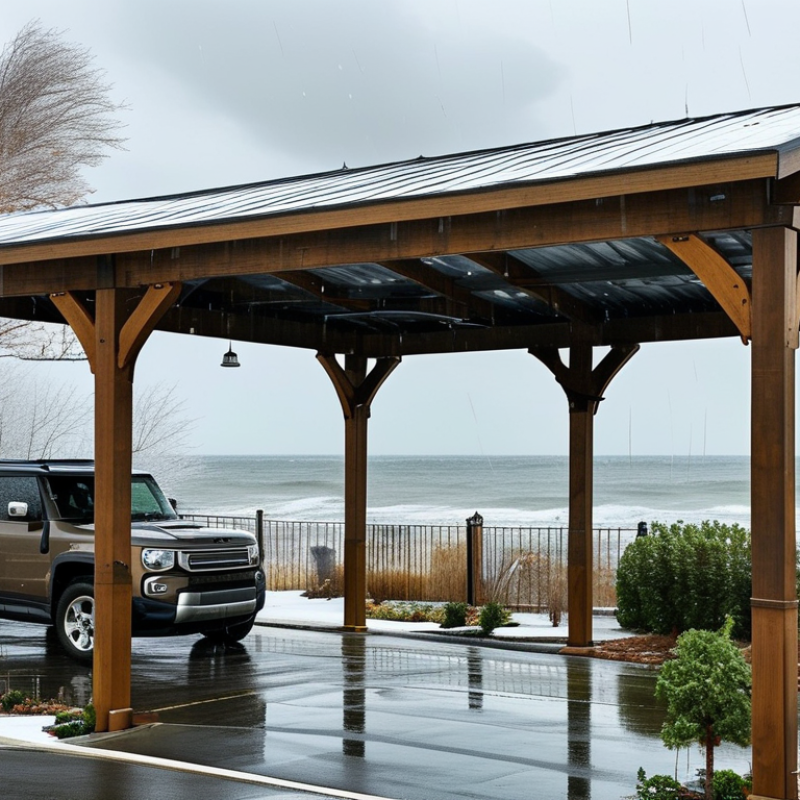
Choosing the best Carport Canopy is not simply about finding the lowest price. It is about matching protection, structure, and daily use to your property. A family SUV needs more clearance than a compact car. A windy coastal site needs stronger anchoring than a sheltered driveway. Small differences matter.
Industry specialist and outdoor-structure consultant Mark Ellison says, “A canopy should protect the vehicle without becoming the property’s weakest structure.” That principle deserves attention. Check the frame material, fabric thickness, roof shape, drainage path, and connection points before comparing colors. Galvanized steel can resist corrosion, but poor joints may still weaken the frame. A heavy cover may block sunlight, yet it can collect dangerous snow if the roof design is unsuitable.
Think beyond the showroom photograph. Measure the driveway, including door-opening space and walking clearance. Watch where rainwater will fall. Imagine removing the cover after a storm. It may sound excessive. It is not.
Your local weather history should guide the decision. Wind, hail, intense sun, and seasonal snow each demand different features. Some buyers focus on width and overlook anchoring. I have seen attractive canopies shift because the ground was assumed to be stable. That assumption needs questioning.
This guide explains how to compare sizes, materials, ventilation, installation methods, maintenance needs, and warranty terms. It also examines common buying mistakes. No option is perfect. The right Carport Canopy is the one that fits your vehicle, climate, budget, and confidence in the installation.
Before choosing a carport canopy, define what it must protect. Measure the vehicle’s length, width, height, mirrors, and open doors. Then add working clearance on every side. A practical target is about 3 feet beside each door and 2 feet at the front and rear. That space quickly exposes poor planning. I once measured only the parked vehicle and ignored the rear hatch. It opened into a fence.
Check the site carefully. Record the driveway width, ground slope, drainage direction, nearby trees, and overhead cables. The 2023 American Community Survey reports that most U.S. commuters travel by private vehicle, showing why daily access matters more than occasional storage. A canopy should allow smooth entry, not create a narrow tunnel. Keep enough height for roof racks, vans, or future vehicle changes. Less than 8 feet may become restrictive.
Weather data should guide the structure’s specifications. ASCE 7-22 provides recognized wind and snow-load criteria for structural design in the United States. NOAA climate normals can also reveal local rainfall, snowfall, and wind patterns. Compare those conditions with the canopy’s rated loads. Do not rely on a generic “all-weather” claim. A larger roof may offer better coverage, but it also catches more wind. Mark the proposed footprint with stakes and string for several days. The layout may look acceptable on paper, yet feel awkward beside a real vehicle.
Choosing a carport canopy starts with the material beneath your hands. Steel frames offer strong support and resist heavy snow when properly coated. Aluminum weighs less and will not rust, but it may bend under severe impact. Polyethylene covers are affordable and flexible, while PVC-coated fabric usually handles sunlight and tearing better. Check the fabric thickness, stitching, and edge reinforcement. A thin cover can crack after one harsh winter.
Design affects daily use as much as material. A peaked roof sheds rain and snow more effectively than a flat roof. Sloping sides can reduce wind lift, especially on exposed driveways. Look for adjustable feet, ground anchors, and reinforced connection points. These details matter during sudden storms. I once selected a canopy by size alone, and the loose side panels became noisy in strong wind. My measurement was correct. My judgment was not.
Weather resistance depends on the whole structure, not one advertised feature. UV treatment helps slow fading and brittleness, but it cannot prevent all fabric aging. Galvanized or powder-coated frames usually withstand moisture better than untreated metal. In coastal areas, salty air demands regular rinsing and careful inspection. Check for water pooling after rain, then tighten or reposition the canopy if needed. Manufacturers’ wind and snow ratings are useful, but installation conditions can reduce real performance. A canopy beside open fields faces different forces than one sheltered by a garage. Think locally.
| Canopy Option | Typical Construction | Common Footprint Examples | UV Resistance | Rain and Waterproofing | Wind Performance | Snow Performance | Typical Service Life | Main Advantages | Common Limitations | Best Suited For |
|---|---|---|---|---|---|---|---|---|---|---|
| Woven Polyethylene Fabric with a Gable Roof | Woven polyethylene cover with heat-sealed or stitched seams, supported by a galvanized steel frame. The sloped roof helps shed rain and light snow. | 10 × 20 ft, 12 × 20 ft, and 20 × 20 ft are common residential sizes. | ★★★☆☆ Moderate when UV-treated; untreated fabric degrades faster in direct sunlight. | Good Water-resistant to waterproof when seams, edges, and attachment points are properly sealed. | Moderate Requires firm anchoring and regular tensioning; performance varies substantially by frame and installation. | Limited to Moderate Light snow may shed from a steep roof, but accumulated snow should be removed promptly unless the structure is engineered for snow loads. | Approximately 3–7 years, depending on fabric weight, UV exposure, weather, and maintenance. | Affordable, lightweight, easy to replace, and available in many sizes and roof styles. | Can flap in strong wind, may fade, and is more vulnerable to tearing or abrasion than coated fabrics. | Seasonal vehicle storage, moderate climates, and budget-conscious installations. |
| PVC-Coated Polyester with an Arched Roof | Polyester scrim coated on one or both sides with polyvinyl chloride. An arched frame reduces flat areas where rainwater and snow can collect. | 10 × 20 ft, 12 × 24 ft, and 18 × 20 ft are common size ranges. | ★★★★☆ Strong UV resistance when the coating contains UV stabilizers. | Very Good Thick PVC coatings provide a low-porosity surface; welded seams generally improve water resistance. | Good Performs well with a rigid frame, correctly tensioned cover, and anchors suitable for local soil conditions. | Moderate Arched roofs help shed snow, but heavy or wet snow can exceed the capacity of temporary frames. | Approximately 5–12 years, depending on coating thickness, climate, cleaning, and installation quality. | Durable, highly water-resistant, tear-resistant, and suitable for frequent or extended use. | Heavier than polyethylene, can become less flexible in cold weather, and may cost more. | Areas with frequent rain, repeated seasonal use, and users seeking a more durable fabric cover. |
| Acrylic-Coated Polyester with a Gable or Hip Roof | Solution-dyed or acrylic-coated polyester fabric mounted over a steel or aluminum frame. Sloped roof designs improve drainage. | 10 × 20 ft and 12 × 20 ft are common residential footprints; larger sizes require stronger engineered frames. | ★★★★☆ Good color retention and resistance to sunlight when the fabric is solution-dyed or UV-treated. | Good Often water-repellent rather than fully waterproof; seam construction and maintenance are important. | Moderate Suitable for properly anchored installations, but not automatically rated for severe storms. | Limited to Moderate Best for climates with little or occasional snow unless the frame has a verified snow-load rating. | Approximately 5–10 years, depending on fabric quality, exposure, and care. | Good appearance, reduced heat absorption compared with some dark PVC covers, and strong resistance to fading. | May require periodic re-treatment for water repellency and is less waterproof than a fully coated membrane. | Sunny climates, attractive residential installations, and locations where color stability matters. |
| Solid Polycarbonate Panels with a Sloped Roof | UV-protected polycarbonate sheets fixed to an aluminum or galvanized steel frame. Panel overlaps and flashing direct water away from joints. | Common bay widths are approximately 8–12 ft; length is often customized in 4-ft panel increments. | ★★★★★ UV-coated panels provide strong protection from sunlight; the UV layer should face outward. | Excellent Rigid panels provide reliable rain protection when joints, edge profiles, and flashing are correctly installed. | Good to Excellent Rigid systems can perform well, but the frame, fasteners, and foundation must be engineered for local wind loads. | Good Sloped panels shed snow, but required load capacity depends on panel thickness, support spacing, and local snow conditions. | Approximately 10–20 years or more with UV protection and correct installation. | Long service life, excellent daylight transmission, strong impact resistance, and no fabric flapping. | Higher initial cost, more permanent installation, possible expansion noise, and greater installation complexity. | Permanent residential parking, high-sun locations, and users wanting a rigid roof with natural light. |
| Galvanized Steel Roof Panels with a Gable Roof | Corrugated or ribbed galvanized steel panels attached to a structural steel frame. A gable roof provides drainage on both sides. | Single-vehicle bays commonly range from 10 × 20 ft to 12 × 24 ft; larger widths need engineered framing. | ★★★★☆ Painted or coated steel resists sunlight well; exposed zinc or paint quality affects long-term appearance. | Excellent Provides a durable weather barrier when fasteners, overlaps, and roof edges are correctly sealed. | Excellent Potentially strong, but only when the complete structure and anchoring system are designed for the site’s wind speed. | Excellent Well suited to snow regions when the roof pitch, purlins, frame, and foundations meet local snow-load requirements. | Approximately 20–40 years or more with corrosion protection and routine maintenance. | Excellent durability, strong weather protection, low flapping, and good resistance to punctures. | Heavier and noisier during rain than fabric, generally more expensive, and less portable. | Permanent installations, high-wind or snowy regions, and long-term vehicle protection. |
| Flat or Low-Slope Fabric Canopy | Fabric cover stretched over a simple frame with limited roof pitch. Some designs use tensioned membranes or a nearly horizontal top. | 8 × 16 ft, 10 × 20 ft, and 12 × 20 ft are common sizes. | ★★★☆☆ Depends primarily on the fabric treatment and exposure. | Moderate More vulnerable to ponding because water and debris may remain on the cover. | Moderate Requires excellent tension, edge support, and anchoring because wind can create uplift on broad surfaces. | Limited Generally unsuitable for regular snow accumulation unless specifically engineered for the local load. | Approximately 2–6 years for common temporary fabric systems. | Simple layout, low profile, easy access, and efficient use of space where weather is mild. | Ponding, debris buildup, wind uplift, and snow accumulation can shorten service life or damage the structure. | Short-term shade, mild climates, temporary parking, and areas with little rain or snow. |

Selection note: The ratings and service-life ranges are typical comparisons, not structural guarantees. Actual performance depends on material thickness, seam construction, roof pitch, frame design, foundation, anchoring, maintenance, and local wind and snow loads. Always check the structure’s tested or engineered load ratings and local building requirements before installation.
Choosing a carport canopy starts with measurements, not appearance. Measure the vehicle with doors, mirrors, and the rear hatch fully open. Add walking space on both sides. A 12-foot width may suit a compact car, but larger vehicles often need 18 feet or more. Measure twice. Details matter.
Shape should follow local exposure. A gable roof sheds rain efficiently, while a single-slope roof can direct runoff toward a planned drainage channel. Flat-looking roofs still need visible pitch; standing water adds weight and accelerates material wear. ASCE 7-22 requires site-specific design values for wind and snow loads, rather than one national assumption. Its wind maps reach basic speeds of 180 mph in some U.S. locations. Coastal or open sites deserve closer engineering review.
Roof configuration also affects daily comfort. A taller roof improves access for SUVs, roof racks, and cargo boxes, but it catches more wind. FEMA’s Home Builder’s Guide to Coastal Construction recommends continuous load paths and reinforced roof connections in high-wind areas. NOAA Atlas 14 provides rainfall estimates for storm return periods, including 10-year and 100-year events, which helps size gutters and drainage. I have seen owners prioritize extra height, then regret the glare and wind-driven rain. A modest overhang, translucent panels, or a carefully oriented gable may work better. Local snow depth can still overturn that choice, so confirm the site data before ordering.
Installation method affects every later decision. A freestanding canopy suits open driveways and usually installs faster. An attached structure can save space, but the wall must be strong and suitable for secure fixing. Before buying, measure the vehicle, door clearance, drainage path, and available working space. I have seen owners measure only the car body, then struggle with mirrors and opening doors. That mistake is easy to repeat.
Stability deserves closer attention than appearance. Choose a frame with reinforced joints, wide footplates, and corrosion-resistant fasteners. On exposed sites, ground anchors should match the soil and local weather conditions. A heavy cover does not automatically mean a safer canopy. Wind can lift poorly anchored structures like a sail. During one installation, I underestimated a sloping driveway and had to reposition two supports. It worked, but the delay showed why a level base matters.
Maintenance should be practical, not optimistic. Inspect bolts, seams, frame joints, and anchor points after storms. Remove leaves before moisture collects along the cover edges. Wash fabric with mild soap and water, avoiding harsh chemicals that may weaken its coating. Replacement parts should be easy to identify and install. I prefer simple designs, although they can look less refined. A few minutes of seasonal inspection can reveal loose hardware, small tears, or early rust before repairs become expensive.
Choosing a carport canopy requires more than measuring your vehicle. Safety features should guide the decision. Look for a strong frame, secure corner joints, and adjustable ground anchors. The cover should resist tearing, water pooling, and moderate wind. In snowy areas, confirm the stated snow-load capacity. A simple visual check helps: inspect stitching, poles, and anchor points before every season. Small defects can become expensive failures.
Local rules also matter. Some areas require approval for temporary or permanent structures. Check setback distances, property boundaries, drainage requirements, and neighborhood restrictions. Your local planning office is more reliable than a seller’s casual advice. Ask about wind and snow standards in writing. Rules can change. I once assumed a lightweight canopy needed no review, but that assumption could have caused a costly removal.
Overall value includes more than the purchase price. Compare the expected service life, replacement-cover cost, warranty terms, and installation effort. A cheaper canopy may need new fabric after one harsh winter. A stronger model may reduce repairs and protect the car better. Still, higher cost does not guarantee better performance. Read independent user experiences carefully, especially comments about rust, leaks, and difficult assembly. Keep receipts and maintenance records. They make future decisions easier. Check the structure after storms, even when it appears untouched. Safety is never a one-time purchase.
Suggested decision weighting for comparing carport canopy options
Use this 100-point framework when comparing products. Safety receives the highest priority because anchoring, structural strength, wind resistance, and fire performance affect people and property. Check local planning, zoning, permit, setback, and snow-load requirements before purchase. Weather suitability and total value should also include installation, maintenance, replacement parts, and expected service life.